




When a buyer opens ChatGPT and types “best CRM for a 10-person sales team,” they no longer scroll a page of blue links. They read one synthesized answer, follow up with two or three questions, and often decide before they ever touch a search results page. That shift is why generative engine optimization (GEO) exists. It is the practice of making your brand, content, and expertise the source that AI answer engines quote, cite, and recommend.
This guide is the pillar of our GEO cluster. It covers what generative engine optimization is, how it differs from traditional SEO, the signal pillars that actually move AI visibility, how large language models pick their sources, and a workflow you can run this quarter. Along the way we link out to deeper articles on each subtopic so you can go as far down as you need.
What generative engine optimization is, and why it matters now
Generative engine optimization is the discipline of optimizing content and technical infrastructure so that generative AI systems, ChatGPT, Google Gemini, Perplexity, Claude, and Google AI Overviews, surface your brand as a trusted answer. Instead of competing only for a ranking position, you compete to be the passage an LLM extracts, paraphrases, and attributes.
The urgency is real. By 2026, AI assistants have moved from novelty to default research layer. ChatGPT reports hundreds of millions of weekly users, Google AI Overviews appear on a large share of informational queries in the US, and Perplexity has built a loyal base of researchers and buyers who trust its cited answers. When these engines answer a question in your category, one of three things happens: they cite you, they cite a competitor, or they cite no one and the user never learns your brand exists. GEO is how you influence which outcome you get.
If you want the conceptual foundation before going deeper, start with our primer on what GEO is, then come back here for the full playbook.
How GEO differs from traditional SEO
GEO and SEO share DNA. Both reward authoritative, well-structured, technically sound content. But the target changed. SEO optimizes for a ranked list of documents a human clicks. GEO optimizes for a single synthesized answer a machine assembles from many sources, often without a click at all.
That difference cascades into everything: how you structure content, how you measure success, and what “winning” looks like. The table below summarizes the practical contrasts. For a deeper side-by-side, see GEO vs SEO.
| Dimension | Traditional SEO | Generative Engine Optimization |
|---|---|---|
| Primary target | Ranking position in a list of links | Being cited or quoted inside an AI answer |
| Unit of competition | The page | The passage or claim |
| User behavior | Clicks through to your site | Often reads the answer, may not click |
| Key success metric | Rankings, organic clicks, sessions | Citation frequency, share of AI voice, referral from AI |
| Content style | Keyword coverage, depth, dwell time | Extractable, quotable, self-contained statements |
| Technical focus | Googlebot crawlability, Core Web Vitals | AI crawler access, llms.txt, machine-readable structure |
The important nuance: GEO is not a replacement for SEO. Strong organic authority is one of the biggest inputs into whether an LLM trusts you. GEO extends SEO into the generative layer rather than discarding it.
The core GEO signal pillars
AI visibility is not one lever. It is the sum of several signals that determine whether an engine can access your content, understand it, trust it, and reuse it. These are the six pillars we audit for every client.
1. AI crawler access
If the bots cannot reach your content, nothing else matters. Answer engines rely on their own crawlers, GPTBot and OAI-SearchBot for OpenAI, Google-Extended for Gemini, PerplexityBot for Perplexity, ClaudeBot for Anthropic, plus real-time fetchers that pull pages live during a query. Many sites accidentally block these agents in robots.txt or at the CDN layer, or serve content only after JavaScript execution that live fetchers may not run. Step one of GEO is confirming every major AI agent can crawl and render your key pages.
2. llms.txt and machine guidance
The llms.txt convention is a plain-text file at your root that points AI systems to your most important, cleanest content, much like a sitemap but curated for language models. It will not single-handedly get you cited, but it signals intent, reduces ambiguity, and helps engines find canonical explanations of your products and expertise. Pair it with clean canonical tags and a well-maintained XML sitemap.
3. Structured data
Schema.org markup (Organization, Article, FAQPage, Product, HowTo) gives engines explicit, unambiguous facts about who you are and what a page asserts. Structured data is a disambiguation tool: it helps an LLM connect your content to the right entity and pull the correct attributes. An accurate Organization schema tied to your brand entity is one of the highest-leverage technical wins in GEO.
4. Content extractability
This is where most content fails. LLMs favor passages that state a complete idea in one place: a direct answer in the first sentence, a clear definition, a specific statistic with a date, a labeled step. Long, meandering paragraphs that bury the answer three scrolls down rarely get quoted. Extractable writing uses descriptive headings phrased as real questions, short self-contained statements, comparison tables, and numbered steps. If you learn one skill from this guide, make it writing quotable passages. Our deep dive on how to get cited by AI walks through the exact patterns.
5. E-E-A-T and brand authority
Experience, expertise, authoritativeness, and trust are not just Google concepts. LLMs are trained and grounded on the wider web, so consistent signals matter: named authors with real credentials, original data and research, citations to primary sources, third-party mentions, reviews, and coverage. When an engine has to choose whom to trust in your category, it leans toward brands with corroborating evidence across many independent sources. Getting mentioned on authoritative sites in your niche often does more for AI visibility than another page on your own blog.
6. Technical health
Fast rendering, clean HTML, server-side or pre-rendered content, valid structured data, HTTPS, and stable URLs all reduce friction for machines. Technical GEO overlaps heavily with technical SEO, with an added emphasis on making content available without heavy client-side JavaScript, since some AI fetchers do not execute it reliably.
How AI engines pick their sources
Understanding source selection demystifies GEO. Modern answer engines mostly use retrieval-augmented generation: when you ask a question, the system runs a search, retrieves a set of candidate pages, and the model synthesizes an answer grounded in that retrieved text, often citing a handful of them. So visibility depends on two stages.
- Retrieval: Can the engine find and fetch a relevant, accessible page from you? This rewards classic discoverability, crawler access, and topical authority.
- Selection and synthesis: Among retrieved candidates, which passages are clear, specific, current, and trustworthy enough to quote? This rewards extractability, freshness, and corroboration.
Different engines weight these differently. Perplexity is citation-heavy and rewards clean, sourced, up-to-date pages. Google AI Overviews lean on content that already performs in Google search and carries strong E-E-A-T. ChatGPT with search blends live retrieval with model priors formed during training, so brands with a broad, consistent footprint have an edge. Claude and Gemini behave similarly, favoring authoritative, well-structured sources. The common thread: be findable, be clear, be corroborated.
A practical GEO workflow
Here is the sequence we run for US clients moving into AI search. It turns the pillars above into an executable plan.
- Baseline your AI visibility. Prompt ChatGPT, Gemini, Perplexity, and Claude with the questions your buyers actually ask, and record who gets cited. For the on-site groundwork, the free TOS AI Visibility Checker scores your website on the 6 GEO signal pillars that affect how likely those engines are to cite it, and compares it with competitors.
- Fix crawler access. Audit robots.txt and CDN rules so GPTBot, Google-Extended, PerplexityBot, and ClaudeBot can reach your priority pages. Publish an llms.txt file.
- Strengthen entity and structured data. Implement Organization, Article, and FAQ schema, and align your brand entity across your site, Wikipedia or Wikidata where appropriate, and major profiles.
- Rewrite for extractability. Lead each section with a direct answer, add comparison tables and numbered steps, and phrase headings as real questions.
- Build corroboration. Earn mentions, original data, expert quotes, and third-party citations so multiple independent sources reinforce your claims.
- Measure and iterate. Re-run your prompt set monthly and track citation share over time.
For a structured, repeatable version of steps one through three, follow our GEO audit framework, and pair it with the right tooling from our roundup of the best GEO tools.
Measuring AI visibility
You cannot manage what you do not measure, and AI visibility needs its own metrics because clicks alone miss most of the value. Track these:
- Citation frequency: How often each engine names or links you for your target questions.
- Share of AI voice: Your citation share versus named competitors across a fixed prompt set.
- Sentiment and accuracy: Whether the AI describes your brand correctly and favorably.
- AI referral traffic: Sessions arriving from ChatGPT, Perplexity, Gemini, and Copilot, visible in analytics as referral sources and growing steadily in 2026.
- Answer presence: Whether you appear in Google AI Overviews for priority queries.
Set a monthly cadence. AI answers are dynamic and change as engines re-crawl and update, so a single snapshot tells you little. A trend line tells you whether your GEO work is compounding.
Common GEO mistakes to avoid
- Blocking AI crawlers by accident. A blanket robots.txt rule or aggressive bot protection can quietly erase you from every answer engine.
- Writing for keywords, not for extraction. Stuffing terms without stating clear, quotable answers leaves nothing for a model to lift.
- Ignoring corroboration. Publishing only on your own domain, with no third-party validation, caps the trust an engine will place in you.
- Treating GEO as a one-time project. Engines update constantly; GEO is an ongoing program, not a launch.
- Abandoning SEO. Retrieval still leans on search discoverability, so gutting your SEO foundation undercuts GEO.
- Chasing every engine equally. Focus first on the engines your specific audience actually uses.
Conclusion: start with a baseline, then compound
Generative engine optimization is not a rebrand of SEO. It is the discipline of earning trust from the machines that increasingly stand between your brand and your buyers. Get the crawlers in, make your content extractable, anchor your entity with structured data, and build corroboration until multiple sources agree that you are the authority in your category. Then measure citation share month over month and keep iterating.
The best first move is to see where you stand today. Run your top buyer questions through ChatGPT, Gemini and Perplexity, and score your website on the 6 GEO signal pillars with the free checker below, before you invest a single hour in changes.
Frequently asked questions
Is generative engine optimization the same as AEO?
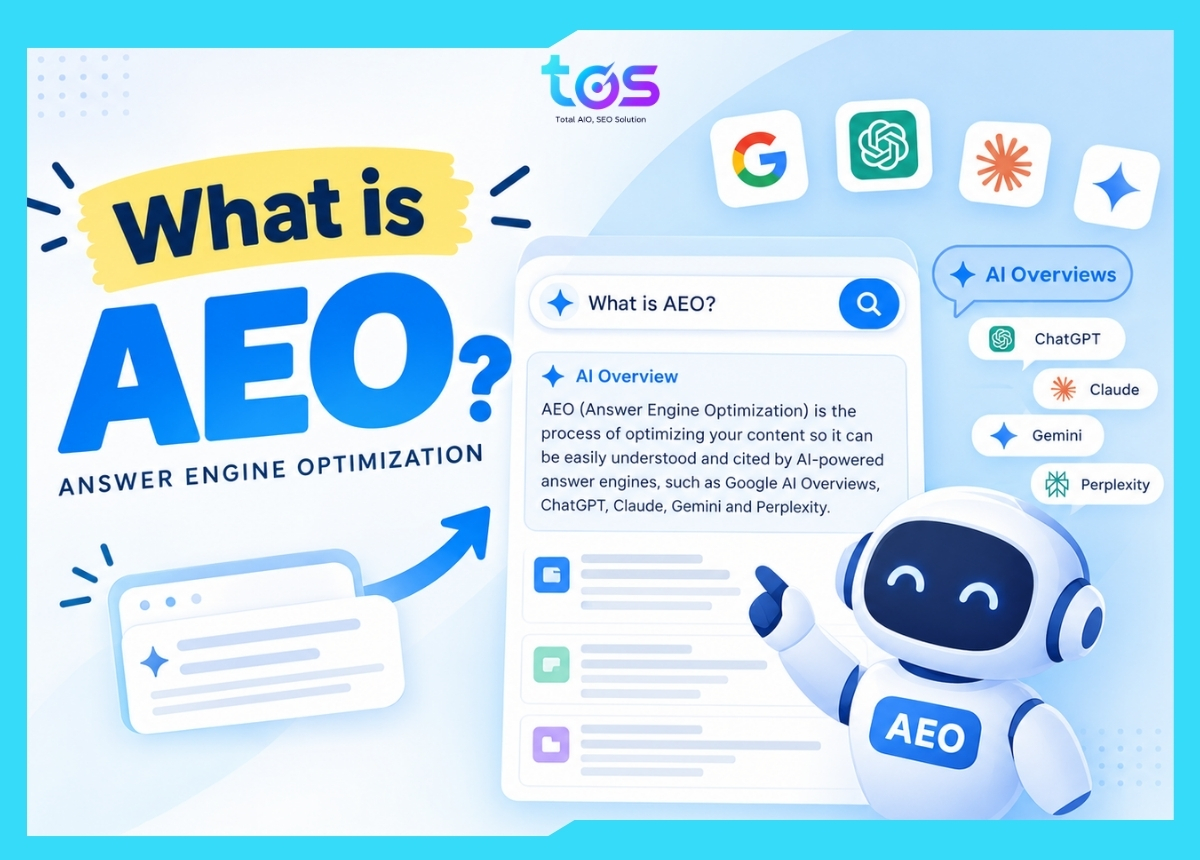
They overlap heavily. Answer engine optimization (AEO) focuses on winning direct answers and featured snippets, while GEO covers the full generative layer, including how LLMs like ChatGPT and Claude cite, paraphrase, and recommend your brand inside synthesized responses. GEO is the broader term for 2026.
Do I need to stop doing SEO to do GEO?
No. Strong SEO is one of the largest inputs into GEO because most answer engines retrieve candidate pages through search. GEO extends your SEO foundation into AI answers rather than replacing it.
How long does GEO take to show results?
Technical fixes like crawler access and structured data can influence citations within weeks as engines re-crawl. Authority and corroboration signals build over months. Most brands see measurable citation-share movement within one to three months of consistent work.
How do I know if AI engines already mention my brand?
Ask them directly with your real buyer questions across ChatGPT, Gemini, Perplexity, and Claude and record whether your brand appears. The free AI Visibility Checker then scores, in minutes, the on-site signals that affect how likely those engines are to cite you, and compares your score with competitors.
 TOS · Search AI Agency
Get fresh SEO & AI insights — every day
Curated, practical, no spam. Join marketers who read TOS first.